
In Brussels, the Arctic challenge is what to prioritize
Once every two years, the Arctic travels to Brussels for the EU Arctic Forum, Indigenous Peoples’ Dialogue and Arctic Youth Dialogue. Sitting in a crowded room at the European Commission, together with Indigenous representatives and other voices from the North, felt special to me.
A lot had happened since the last forum in June 2025. The Greenlandic partnership, the update of the Arctic policy and the Icelandic “No” to the EU were on everyone’s mind. In other words, it was a particularly interesting moment to take the pulse of Arctic cooperation in Brussels.
From Arctic narratives to the Arctic policy update, here is a summary of the talking points that caught my attention.
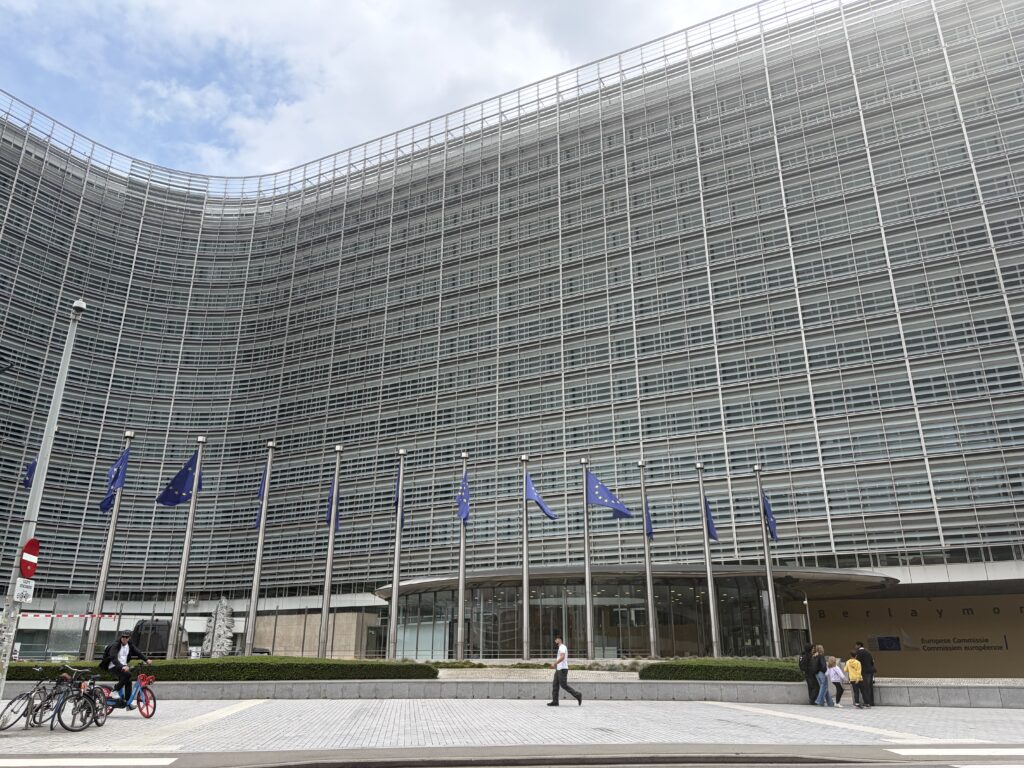
At such conferences, what is said is important, who said it gives context, and what is not said tells us even more.
The opening remarks offered an early indication of the changing role of the Arctic in EU policy. Commissioner Jozef Síkela took the floor immediately after the opening address by Commissioner Costas Kadis, the European Commissioner for Fisheries and Oceans.
Jozef Síkela, the EU Commissioner for International Partnerships, is also responsible for the update of the EU Arctic Policy. His presence at the opening was therefore particularly timely, just one week before he accompanied European Commission President Ursula von der Leyen on a two-day visit to Greenland and Denmark.
A unified voice from like-minded states?
Twelve Arctic ambassadors and senior Arctic officials gathered at a roundtable to talk about cooperation in the region. As they were reading their carefully prepared statement, a recurring duality appeared. The Arctic states have argued that decisions concerning the region should be made from the North. At the same time, non-Arctic states emphasized the impact on their territories, thereby justifying their right to also have a say. This is where the EU comes into play.
Hlynur Guðjónsson, Iceland’s recently appointed Senior Arctic Official, said there were benefits in the areas of scientific research and economic development without elaborating. He didn’t, however, mention the Icelandic vote that had occurred three days earlier. That prompted EU Arctic Ambassador and Special Envoy Claude Véron-Réville to ask whether the Icelandic people had actually seen these benefits yet.
Any elephants in the room?
If the audience was looking for a unified voice among like-minded states, the Norwegian intervention showed how difficult that may be. Solveig Rossebø, the Senior Arctic Official of Norway, was asked to comment on a recent statement from the energy minister that Norway will drill in the Arctic regardless of the EU’s position. Rossebø described the minister’s statement as “not very diplomatic”, prompting the audience to nod in unison, in full agreement.
She then stood by her own government recent statement: Norway will stop drilling when the EU no longer needs its oil and gas. She emphasized that with such a moratorium, the EU would only scare off oil and gas companies, which would stop investing and would no longer be able to supply these essential resources within a few decades, thereby forcing the EU to buy them from Russia.
Security was an ever-present topic. The panelists repeatedly mentioned Russia’s invasion of Ukraine, but the threats themselves remained largely undefined. The U.S. and China, increasingly seen as sources of geopolitical concern in the Arctic, barely featured in the discussions. Instead, security was mostly framed around thriving communities, resilient infrastructure and effective defence systems. That left the question of what exactly the Arctic needs to be secured from somewhat open.
Celebrating a ruby-wedding anniversary
An impressive Greenlandic delegation traveled to Brussels. Múte Bourup Egede, the Minister of foreign affairs, business and minerals, delivered the keynote speech, followed by a roundtable discussion.
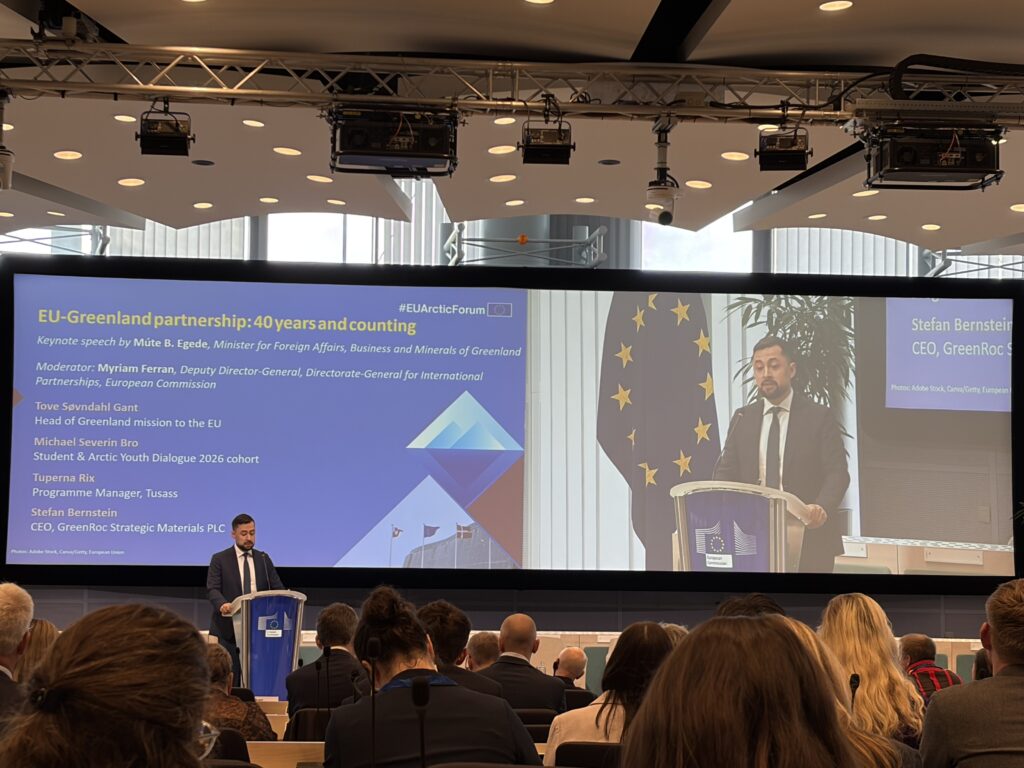
The Greenlandic delegation raised a number of points:
- The country wants a partner for development, for self-determination,
- Resilience in the Arctic begins with people and strong communities,
- Trust is key and has to be nurtured and fortified every day,
- The need for long-term investments, which stay in Greenland and go beyond commercial return,
- Budget sovereignty should remain, with decisions made by the Greenlandic government and parliament.
The Greenlandic delegation left the conference after this session, with the EU Commission delegation due in Nuuk shortly afterwards.
The Arctic Mayors have spoken
Six Arctic municipalities including Salla in Finland and Yellowknife in Canada were represented on stage.
The main message? The EU must engage with local governments from the very beginning of the planning process, not just when the time comes to implement new policies. Their proximity to the citizens, the businesses and the universities make the best source of knowledge about what people need to thrive.
The presence of Arctic youth added another dimension. Young people were represented across several panels and spent the days before the forum developing their own policy recommendations, reminding the audience that Arctic policy is also about those who will have to live with the consequences of today’s decisions.
While everyone agreed that security is no longer limited to the military sphere, and that people and strong communities are essential, mayors voiced it with greater conviction, bringing the audience back to basics: housing, education, roads, electricity, and water supplies. For many, these topics belong to another century, but they are the reality in the North. Military men and women, moving up North, reinforce this reality by increasing the need for essential local investments.
The Canadian Arctic illustration
Mayor Solomon Awa traveled all the way from Iqaluit in Nunavut to learn from others and share his views. What prompted his decision to take part in the European conference? The Indigenous component of the event clearly resonated with him, and it was an opportunity for him to get together with the Arctic Mayors Forum’s crew.
Mayor Awa is also a Ranger, a member of the Canadian Armed Forces who patrols the vast expanses of the North.
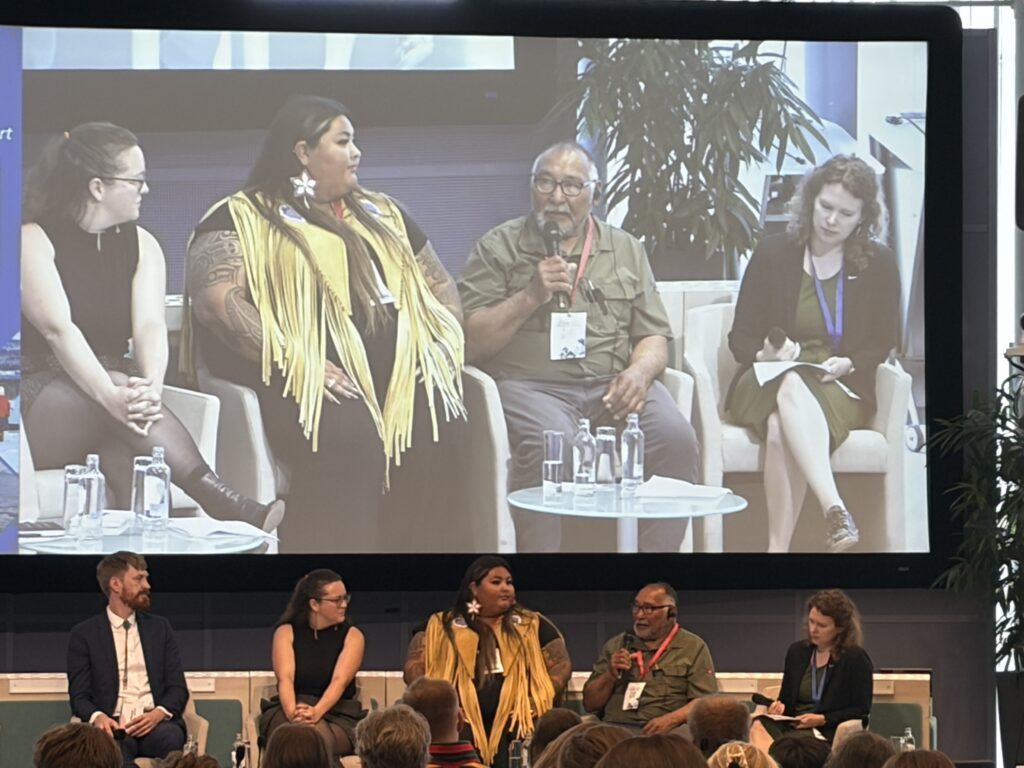
His priorities are diverse. Education is one: Nunavut has been using Alberta’s curriculum since the creation of the territory in 1999. The problem is the curriculum is only available in English or French. That means Nunavummiut cannot study in their own language, Inuktitut.
The municipality expects the number of residents to increase by 25% to around 10,000 residents by 2050. A significant portion of that increase is due to military personnel moving with their families to the region. Population growth requires basic infrastructure to keep pace. To illustrate the challenge, Mayor Awa used a fishing metaphor. It takes much more than a fishing hook to catch a fish: to get people to settle in the North, it is not enough to simply bring them there. Housing must be carefully planned. There is no shortage of space, but building new homes is more expensive in the North and takes longer. Drinking water is another factor to consider: the increase in population will require expanding the lake, building larger reservoirs, and installing new water pipelines.
The Arctic narrative: a wildlife sanctuary or a huge military base?
The North has long been known for its fragility, with most people picturing it as the homeland of polar bears and other endemic wildlife. It is now regularly described as a new military frontier marked by growing geopolitical tensions.
A consensus emerged among participants regarding the lack of ambition on biodiversity. Biodiversity and climate change now take a back seat to security-related issues when national and international bodies develop their Nordic strategies. But neither the environmental nor the security narrative tells the whole story.
The Arctic needs to build its own supply chains. To achieve this, the region needs investors, and the narrative will have to shift. Mads Frederiksen, Director of the Arctic Economic Council, emphasized that the language used in the joint statement will be of paramount importance in supporting the idea that businesses can thrive in the Far North.
The Greenlandic perspective offered by Miki Jensen, Director of Innovation South Greenland, added another dimension. The North expects way more than just money; it also wants access to markets and develop skills locally.
Taken together, the discussions illustrated what is at stake in the Arctic, and the challenge for the European Union of taking these different priorities into account. Those who want to turn the Arctic into a hub for data centers and investments in artificial intelligence, those who anticipate military threats, and those who are committed to providing decent living standards for their people.
The EU’s new Arctic Policy will show how Brussels intends to bring these disperate priorities together.


