
Churchman and militant Cossack: Aleksandr from Severomorsk went to war – and was killed
Aleksandr Agafonov worked in a local church and co-founded a Cossack community in Russia’s northern naval city of Severomorsk. He is among a growing number of members of Russia’s resurgent Cossack movement who have gone to fight in occupied Ukraine — and never returned.
“May the Kingdom of Heaven welcome the newly departed warrior Aleksandr Agafonov, who laid down his life for his friends,” read a post on social media from St Andrew Cathedral. Agafonov, 48, served as an acolyte in several churches in Severomorsk, headquarters of Russia’s powerful Northern Fleet. During services he assisted priests at the altar, carried the processional cross and candles, prepared the censer, rang the bells and helped with the bread and wine. He was known locally for his fine singing voice and performed at the city’s cultural centre with a vocal ensemble. Yet beneath the quiet, unassuming exterior was also a hardened soldier.
Judging from posts on his social media account, Agafonov enlisted in 2024. He was reported killed in early 2026. Few details have emerged about where he was deployed, but a photograph posted online shows him in military uniform carrying an automatic rifle on occupied territory. He is believed to have served in a Cossack unit. Agafonov was one of seven founders of the Severomorsk City Cossack Community, formally registered in April 2024, according to Russian official records.
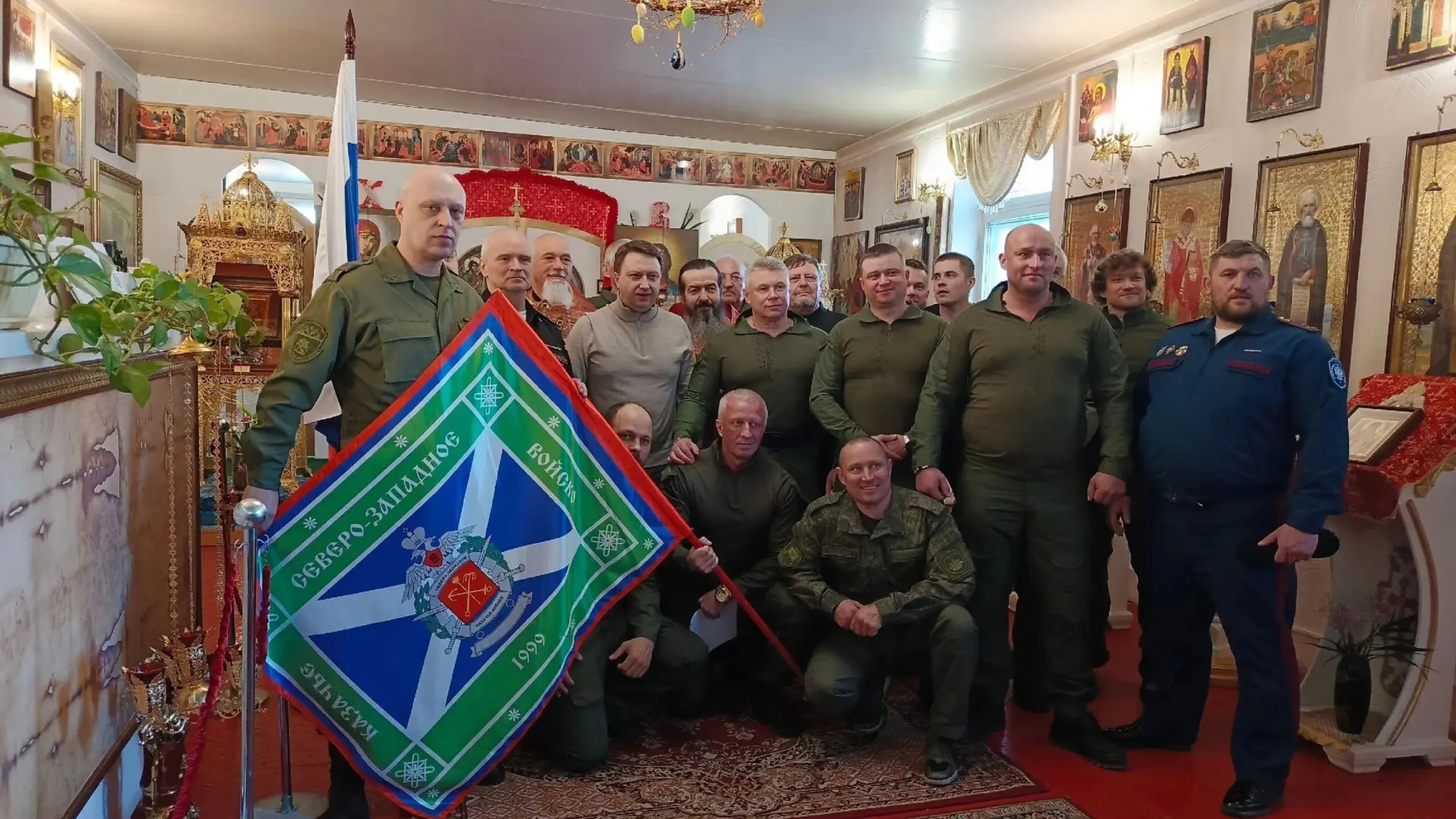
His death highlights the increasingly visible role of Cossack organisations in Russia’s war effort. Across Russia — including on the Kola Peninsula — new Cossack groups have been established in recent years, maintaining close ties with both the armed forces and the Russian Orthodox Church. Only days after the Severomorsk community was officially registered, its leaders met Bishop Tarasii, the ultraconservative head of the local diocese. Historically, the Cossacks were semi-autonomous, predominantly Slavic Orthodox communities living on the fringes of the Russian Empire. Today, many who join Cossack associations have no ancestral connection to the tradition.

Aleksandr Vatlin, the local ataman, or Cossack chief, has said that the Severomorsk group aims to “protect municipal and regional sites, promote law and order, and prepare young men for military service”. Many of its members are veterans of previous wars and conflicts. They are involved in the current war both through recruitment and fundraising at home and through direct participation in combat in occupied areas of Ukraine. Vitalii Kuznetsov, the national chief ataman, claimed in December 2025 that nearly 20,000 Cossacks were serving on the front line. Since the launch of the full-scale invasion, more than 49,000 had taken part in the fighting, he told state propaganda media Rossiiskaya Gazeta.
Thousands are believed to have been killed — among them Aleksandr Agafonov. Oleg Konyshev, the regional ataman on the Kola Peninsula and himself a veteran, said in early 2025 that around 30 local Cossacks were then at the front. Among those involved are members of the clergy. Leonid Suloyev, formerly a priest in Olenya Bay — home to Russia’s secretive Main Directorate for Deep Sea Research — now serves in Severomorsk. With a background in Russian special forces, he is one of at least six clerics from the Severomorsk diocese reported to have served in occupied territory.
Suloyev fought with the Baltika Cossack Battalion, judging from photos published on the unit’s social media account. In one image he stands in uniform holding a rifle; in another he poses alongside fellow fighters. He is also an avid motorcyclist and a member of the nationalist Night Wolves biker club. A prominent figure in the regional Cossack movement, Suloyev heads the Cossack Department of the Severomorsk diocese and works closely with the two top church leaders on the Kola Peninsula, Metropolitan Mitrofan and Archbishop Tarasii. He oversees diocesan fundraising efforts for military chaplains.
“Military chaplains need our support. Please do not forget our common cause,” he wrote in a recent post. In addition to serving in combat, Suloyev has travelled to Prymorsk, an occupied city in Ukraine’s Zaporizhzhia region, delivering aid from Murmansk. During a visit to a local church, he unfurled a large flag bearing the “Z,” Russia’s symbol of its war of aggression.